Showing posts with label South Asia. Show all posts

Thursday, September 5, 2024

C-130’s Havoc! How Pakistan’s ‘Modified Bomber’ Wreaked Havoc On Indian Positions After A ‘Disastrous’ Paradrop


The wars in the Indian sub-continent have been dissected threadbare, but there have been little-known operations done by the American-made C-130s during the 1965 India-Pakistan war. The cargo aircraft supplied to the Pakistan Air Force (PAF) was modified to become a bomber and raid the Indian runways.

The other important mission carried out by the C-130 fleet was the audacious para commando attack planned by Pakistan. The commandos were inserted by C-130B to cripple three frontline airbases of the Indian Air Force (IAF) in Punjab – Pathankot, Halwara (near Ludhiana) and Adampur (near Jalandhar).

The US Air Force (USAF) is now considering the dispersed nature of warfare that it will experience in the Indo-Pacific against China. It is turning its airlifters, C-130J, into traditional bombers and giving them more offensive capabilities. The PAF made the modification in 1965.

On the intervening night of 30-31 August 1965, the general atmosphere in the Indian subcontinent was tense. News of Pakistan’s military build-up along the border hinted at impending war. The IAF ordered its units to arm all its fighter jets and bombers on September 1, 1965.

At 1530 hours, the Number 3 Squadron of the IAF operating the French Dassault Mystere fighter jets was asked to prepare a strike in the Chhamb sector, where the Pakistan Army had intruded into Indian territory.

Twenty-six fighter bombers of the IAF consisting of 12 British-made Vampire aircraft of Number 45 and 220 Squadrons and 14 Mystere aircraft of Number 3 and 31 Squadrons took off from Pathankot for the Chhamb Sector.

“The mission marked the start of the air action against belligerence by Pakistan,” the IAF site reads. Just before 1800 hours, the first IAF aircraft struck the Pakistani Patton Tanks. The IAF managed to annihilate 10 tanks, 2 Anti-Aircraft guns, and 30-40 vehicles of the Pakistani Army.


The newly acquired MiG-21s of the IAF were also providing air cover to the fighters carrying out raids in the next few days. Even on September 6, 1965, the Indian fighter jets carried out strikes in Chhamb (on the Indian side) and Norowal area (on the Pakistani side) with “no enemy air opposition.” “Most of us were highly suspicious of this: the suspense threatened to get us well before PAF did!!!” a tongue-in-cheek entry in the 3 Squadron diary from September 6, 1965 read.

On the same day, PAF’s Sabres entered the Indian airspace and hit the Pathankot airfield. This strike resulted in the destruction of eight IAF aircraft on the ground at Pathankot. The Sabres were heading towards Adampur and Halwara airbase but were stopped by the IAF’s Hawker Hunter fighter jets.

The day also saw the first showdown between the Indian MiG-21s and Pakistani Starfighter 104s. The IAF pilot in MiG-21 fired air-to-air missiles in actual combat.

While the PAF’s Pathankot raid was a success, given the odds in its favor, the failure of the Adampur and Halwara air strikes did not go well with the PAF. Raids on the Amritsar, Porbandar, and Ferozpur radars, as well as Jamnagar airfield, were also a failure. After 6 September, the PAF stopped all daylight bombing missions into India.

Audacious Raids By C-130B

On September 6, the PAF’s raid on Pathankot airbase inflicted large damage. The IAF had also suffered an early setback over Chhamb and had lost four Vampires. This was supposed to have left the IAF in disarray.

Till 6th September, the lack of significant activities on PAF’s side was intriguing the IAF. However, it was just a lull before the PAF put its most audacious plan into action. The Pakistanis dropped paratroopers at Pathankot, Adampur, and Halwara in the intervening night of 6-7 September. Three C-130 aircraft of PAF dropped 60 Special Service Group Commandos each in the wee hours.

The three groups of 60 paratroopers each were dropped in the vicinity of each airbase. Each group was led by one or two officers and a junior commissioned officer (JCO).

The drop was successful, but the Pakistan commandos ran into unforeseen difficulties. A concerted effort by civilians and the Punjab Police resulted in the apprehension of most of the Commandos.

Villagers spotted the Pathankot group first, and an alarm was raised. This led to the discovery of the Halwara group. The Adampur group also landed in the middle of the village, and the dogs’ barking gave away their presence.

In the end, of the 180 para-commandos air-inserted, 138 were taken prisoners and taken to POW camps. Twenty-two were lynched by the joint combing teams of villagers armed with sticks and police. Only 20 para commandos were unaccounted for and were thought to have escaped back to Pakistan.

One notable, commando-style escape was of Major Hazur Hasnain, the Halwara group commander who, along with his friend, hijacked an IAF jeep and somehow managed to return safely.

According to PAF officer Kaiser Tufail’s account, operational considerations for the SSG’s employment were: “The operations would be mounted in the early hours of the night. Air missions (para-commandos) would be dropped on the target. Exfiltration would be either by landing an aircraft on the captured airfield or by rendezvous with a helicopter, given the vast distances separating the targets from friendly forces.”

The Pakistan Army officers were shunted out for opposing the use of the World War II tactic of utilizing “commandos in insurgency and prolonged guerrilla warfare roles that were central to the impending Operation ‘Gibraltar.’”
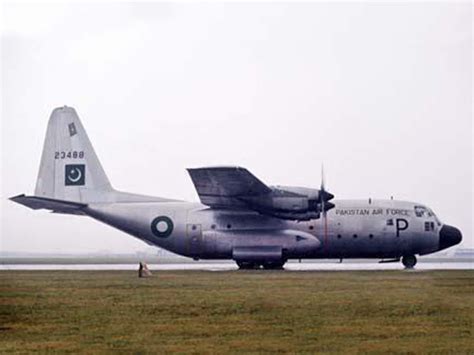


Four airfields, viz Adampur, Ambala, Pathankot, and Halwara, were agreed upon, though a day before the attack, Ambala was canceled. Three teams, each of 60 commandos including three officers, were planned to be air-dropped by three C-130s. Each team was to have one wireless set to be able to keep the C-130s informed of their progress. Individual commandos were provided with two days’ rations (five methi rotis each) and 400 rupees in Indian currency, in addition to personal weapons, explosives, grenades, etc.

Talking about the ill-planned mission, Tufail opined: “The AHQ (Army Headquarters) had also left several issues unresolved during the planning stage. For instance, the idea of exfiltration of commandos by C-130s landing on the just assaulted airfields defied common sense, but either the PAF C-in-C remained unaware of this plan or had rashly approved it.”

C-130 Bombers Modified

As the war proceeded, the Pakistan Air Force modified the C-130s to drop bombs. C-130 bombers targeted Indian tanks and guns in Ramgarh of the Sialkot sector. As part of its riposte strategy, the Indian Army had made advances in the Sialkot sector in response to Pakistan’s advent in Jammu and Kashmir.

In addition, Indian tanks advanced in the Chawinda region. Both areas resulted in two of the biggest tank battles in the history of the Indian subcontinent.

Two C-130s PAF came out in support of their forces and dropped nine tons of bombs each on the night of 15 September. On the following night, a single C-130 strike was repeated against Ramgarh, destroying Indian tanks and guns as well as ammunition and fuel dumps.

Seven officers of the Transport Wing were awarded the Sitara-e-Jurat, and 2 JCOSs the Tamgha-e-Jurat.

Some estimates suggest that the IAF flew over 4,000 combat sorties and the PAF a little over 2,000. The Indian account of the 1965 war suggested that the IAF lost 36 aircraft while still parked on the ground.

On the other hand, in aerial dogfights, the IAF lost just 14 aircraft while shooting down 18 Pakistani jet fighters. Pakistan ended the war, having depleted 17 percent of its front-line strength, while India’s losses amounted to less than 10 percent.

Wednesday, August 14, 2019

Seeds of Kashmiri youth’s alienation lie in graveyards

September 2018
Tikpora Lolab (Kashmir): It was on October 11 that her brother was killed during a gunfight with the security forces. Her tears have since dried up, but the flow of mourners continue unabated in their house in the beautiful Lolab Valley of Kashmir. Asimah is trying to come to terms with the death of her brother Manan Wani, but she keeps saying one thing: “It (joining militancy) was so sudden that we did not realise it. We knew when he picked up gun that he will kill someone or get killed.”
Kashmir

The despondence in Asimah’s voice is also palpable in Manan Wani’s father – Bashir Ahmed Wani, a lecturer at a college in nearby Sogam area. Sitting stoically as mourners continue to pour in from across Kashmir, Bashir exhorts the politicians to find a solution to wrest the growing trend of youth picking up guns. “I am not a politician. I cannot tell why children are picking up gun. It is for the politicians to find a solution,” Bashir said.

Manan Wani has shocked people across cross-sections of Kashmir conundrum for leaving behind an illustrious life that waited for him and picking up guns. But, the story emerging from the profiles of recent militants killed at the hands of security forces is a sordid one. In these stories parents are rendered helpless in stemming the growing number of youngsters opting for militancy to push back the high-handedness of security forces. Similar disbelief is writ large on the face of the father of Ashiq Hussain Zargar, the 23-year-old joined Hizbul Mujahideen and was killed along with Manan Wani. Ashiq was the sole bread winner of his family.

After Burhan Wani’s death, everyone in Kashmir had come out on streets and pelted stones. The state police responded by invoking the Public Safety Act (PSA) – 1978, which allows preventive detention of people against whom there is no criminal track record.  Hundreds of people, including juveniles, have been jailed on administrative orders of the deputy commissioners following the death of Hizbul Mujahideen Commander Burhan Wani. Those detained were treated like hardened criminals and children as young as 15-year-old were put alongside criminals. “Everyone had pelted stone after Burhan Wani’s death. What police did was to slap PSA against the young. Many a times the police men would ask Ashiq to come. He was scared that he would be tortured, so he ran away,” said Ashiq’s younger brother Firdaus, his eyes emotionless. Ashiq had been missing for 5 months and they had filed a missing person report.

Harangued parents have run pillar to post to locate their children arrested under PSA. From 2016-February 2018, 1,150 people were detained under PSA. As many as 55-60 per cent of the detainees were in the age group of 15-28 years. Under PSA there is no trial as all detainees are considered guilty. Sometimes, even if the parents manage to get the PSA order quashed against their child quashed, the police immediately gets another detention order against them. Under the Section 8 (ii) of the Act, a person can be detained for up to 2 years from the date of offence, if the offence is prejudicial to the security of the state.   

“PSA is being used to target the youth. And the no-talks stand of the Centre is increasing militancy. Most militancy recruitment are successful due to trust deficit in the youth,” says Waheed Ur Rehman Para, the youth president and Spokesperson of Jammu and Kashmir Peoples Democratic Party (PDP). The narrative of ‘dignity in death’ among the youngsters has gained traction and is reflected in the spike in number of militants in the valley from the all-time low of 78 in 2013 to nearly 360 in 2018. The number has increased even as the security forces have killed around 170 terrorists/infiltrators since January 1, 2018.

“The government needs to understand that the seeds of the youth’s alienation are in the graveyards. Today, the killings of the ‘militants’ have been incentivised over surrender,” Para added. The 30-year-old politician from Pulwama has been in the forefront of sports movement in the valley to help the enraged youth channelize their energy. He has also survived an assassination attempt in August this year.

The stand-off between the youngsters and security forces have been evident during the funeral of Manan Wani. As the news of his “encounter” – as the killing by security forces are called in the valley- spread thousands of youth from all parts of the valley converged in his village. The police fearing a repeat of Burhan Wani, blocked the roads to Tikpora and detained many of them under PSA. The bail amount asked was Rs. 30,000. Many harried parents, barely able to contain their tears, have been meeting local politicians to get their children freed even after two weeks. These funeral processions in reality have become the recruitment advertisements for militancy.

The arbitrariness and the perpetual continuity of the PSA has resulted in many youngsters going in hiding. “There are children in the village would go and stay with their relatives, and only dare to return to their homes during night,” Ashiq’s brother Firdaus said. With 63 per cent of Kashmir’s population under the age of 30 and 70 per cent below the age of 35, the elderlies are finding it difficult to mitigate their sense of frustration and alienation with the system.

Bashir Wani summed up the fear and frustration of parents in Kashmir by saying: “I have been working hard all my life hoping that Manan would grow up and do something for the society. The path that he chose for himself has caused me immense pain. It is for all of us (society and the state) to find out why our children are becoming violent.” 

(This piece was written during my last visit to Kashmir in September 2018.)

Monday, October 3, 2016

Russian balancing act in South Asia

The changing geo-political equations in the Indian sub-continent have left Russia in a flux seeking to have a strategic balance between India and Pakistan. Even as its soldiers are in Pakistan for their maiden joint military drill, Russia on Monday supported India’s surgical strikes by contending that every country has a right to defend itself.

Russia’s Ambassador to New Delhi Alexander M Kadakin on Monday welcomed the surgical strikes conducted by India on the intervening night of September 28-29.

“Greatest human rights violations take place when terrorists attack military installations and attack peaceful civilians in India. We welcome the surgical strike. Every country has right to defend itself,” the Russian Embassy quoted Kadakin to have told an Indian news channel.

India has restrained from officially commenting on the war games between its arch rival Pakistan and arch patron Russia. The only saving grace for New Delhi was that Moscow cancelled the last leg of the military exercise "Friendship-2016" planned in the Pakistan-Occupied Kashmir (PoK).

The Russian Envoy tried to ally India’s discomfort at the growing proximity between Islamabad and Moscow. “India should not be concerned about military exercises between Russia and Pakistan because the theme of the exercise is anti-terror fighting. That's in India’s interests that we teach Pakistani army not to use itself for terror attacks against India. And the exercise was not held in any sensitive or problematic territories like Pakistan-occupied Indian state of Jammu", said the Russian Ambassador. The exercise is being seen a response to the deepening of defence cooperation between India and the US.

The latest statement emanating from Russia has been one of the series of statements issued earlier Moscow condemning the Uri attacks and asking Pakistan to make more efforts to rein in the terrorists in its territory.
With India seeking to diversify its defence supply has been purchasing military hardware from the US and European countries; Pakistan has tried to woo Russia and has expressed interest in buying Sukhoi fighter jets. 
 

Friday, July 22, 2016

Petrapole : A step towards integrated South Asia

New Delhi, July 21: In a major push towards improving economic interlinking of South Asia, India and Bangladesh on Thursday inaugurated the Petrapole Integrated checkpost – the biggest land port in South Asia.

The Petrapole-Benapole border crossing is an important trade point for both the countries with 50 percent of the total trade passing through it. Trade worth over Rs 15,000 crore is conducted through Petrapole ICP and is more that all the Indian Land Ports and Land Customs Stations combined together.

“Eight such integrated check posts along Indo-Bangladesh border to be set up in times to come,” Prime Minister Narendra Modi said after jointly inaugurating the check post through video-conferencing with Bangladesh Prime Minister Sheikh Hasina.

Prime Minister Modi emphasized that the ICP was important not only for the bilateral trade but also in giving an impetus to the economic growth of the two countries. The check post will also trigger economic integration and connectivity between both countries. “Petrapole ICP will aim to provide better facilities for effective and efficient discharge of functions such as security, immigration and customs. It will also provide support facilities for smooth cross-border movement of people, goods and transport,” Modi added.

According to The World Bank, South Asia is the least integrated region region in the world. The intra-regional trade in South Asia is less than 5 percent as against 35 percent in East Asia and 60 percent in Europe. Due to lack of connecting facilities the cost of trading across borders in South Asia is one of the highest in the world. It is 20 percent cheaper for India to trade with Brazil than with Pakistan. And the estimates see a potential of 300 percent increase in Bangladesh’s exports to India.

Modi also reiterated India’s support to Bangladesh to fight terrorism. “India stands with Bangladesh in its fight against terrorism and will extend all possible help in this regard,” said the Prime Minister.

Wednesday, December 10, 2014

A ‘Galle-ing’ experience

By Admiral Arun Prakash, former Chief of Indian Navy

"Instead of merely moaning about China’s ‘string of pearls’ and ‘maritime silk route’ strategies, India needs to craft creative, dynamic and long-term maritime alternatives.”

December 26, 2004, Sunday morning, saw the calm in Naval Headquarters (NHQ) being shattered by ominous reports of powerful seismic shocks and giant tidal surges in our Bay of Bengal islands and coastal areas. As the first Indian Navy (IN) warships and aircraft were being despatched on relief missions, appeals for assistance started coming from Sri Lanka and the Maldives. Having assigned resources to cope with the domestic emergency, NHQ considered it equally imperative to rush aid to stricken neighbours.

Galle in the year 2014


Given the languid functioning of our bureaucracy, a proposal of this nature could have taken weeks or months to be processed by the ministries of defence, external affairs and finance. To one’s utter amazement, the national security adviser (NSA) accorded instant approval on the phone, with the words, “We will sort out the paperwork on Monday”. Eighteen hours later, citizens of Galle on the southern tip of Sri Lanka awoke to see Indian warships, laden with relief material, anchored off the devastated harbour.

Fast-forward to December 1, 2014 — a decade. I arrive in this picturesque port town for the Galle Dialogue, to be told by a Sri Lankan admiral, “People in Galle remember the tsunami. If you tell shopkeepers that you are from the IN (Indian Navy), they will not let you pay.”


Initiated by the Sri Lankan ministry of defence in 2010, the annual Galle Dialogue has gained in significance and momentum with 38 nations, spanning the full alphabet from Australia to Zambia, represented at its fifth edition. India was given due prominence and the printed programme showed Dr Ajit Doval, India’s NSA, as guest of honour and keynote speaker, with the first two sessions being chaired by Indians; one of them being the vice chief of naval staff (VCNS).

The NSA’s oration on regional maritime security issues was heard with rapt attention and drew applause as he, tactfully, mentioned the early contributions of Sri Lankan statesmen towards creating an Indian Ocean zone of peace. The anti-climax came when it was discovered that the Indian VCNS (Vice Chief of Naval Staff) had not arrived on the expected flight. The hosts, too polite to pose awkward questions, quietly found a substitute to chair the session. The Galle Dialogue 2014, thus, saw participation by the commander of the Pakistan Fleet, the deputy Chief of Staff of the PLA Navy (PLAN) and a dozen other flag officers, but the IN invitee was absent; leaving many questions hanging in the air.

The whispered explanation, when it came, was on entirely predictable lines; apparently, an MoD (Ministry of Defence) functionary had turned down, at the last minute and for reasons unknown, the participation of the VCNS. One felt a sense of déjà vu because the all-powerful and non-accountable MoD bureaucracy has a known penchant for sitting on files till the 11th hour, and then whimsically approving or, more often, rejecting the proposal. It is in the latter context that a recent Indo-Sri Lankan diplomatic spat assumes significance.

During September-October 2014, Chinese submarines, accompanied by support vessels, docked in Colombo Port on two occasions. This peacetime transit and replenishment of a submarine was described, both by the Chinese and the Sri Lankan governments, as “common practice”. According to media reports, India took umbrage and told Colombo that its actions were of “serious concern to India’s national security.”

However, a look at the past would show that the episode called for quiet diplomacy rather than public display of indignation. While Sri Lanka’s victory over the LTTE owes much to many nations, including India, it was China’s military support that stood out for scale and constancy. China maintained bonded warehouses in Galle which supplied arms and ammunition to Sri Lankan forces on demand. Beijing also provided heavy weaponry and fighters; either directly or through a willing Pakistan. 

In comparison, India’s military aid to Sri Lanka was slow and sporadic. South Block remained hostage, not only to blackmail by Chennai but also to its own timidity, myopic vision and inertia. A saving grace was the camaraderie, at senior levels, of the Indian and Sri Lankan navies, which enabled them to reach out across Palk Strait in times of need. The IN tsunami-relief operation helped strengthen bonds.

Today, China’s role in transforming this island nation, through massive loans and creation of impressive infrastructure is undeniable. India, on the other hand, has been laggard in assisting Sri Lanka’s development on a significant scale.

In the face of China’s advance into the Indian Ocean, all that India has had to offer, so far, is the vapid nostrum of ‘strategic restraint’. Moreover, the dissonance between MEA, MoD and NHQ has often thwarted the navy’s endeavours to create strong bonds with maritime neighbours. A peripatetic PM Modi is, now, giving strong indications that India’s foreign policy may be acquiring a badly needed grand-strategic underpinning. 

A practitioner of realpolitik, Sri Lanka is not above playing one neighbour against the other. But given its client status vis-à-vis China, it may not have had the option of denying entry to PLAN submarines. However, Sri Lanka must not allow itself to become China’s pawn, in total disregard of neighbouring India’s strategic interests. 

The nothern-most tip of Sri Lanka in Jaffna.India is saddled just across the narrow Palk Strait.

Countries in our immediate neighbourhood, many of them island nations, seek maritime security; sometimes through direct naval presence, but more often through urgent requests for material aid, training assistance and advice. In this context, rushing supplies of water to the Maldives was a fine gesture, but setting up a de-salination plant will win us far more goodwill. 

Instead of merely moaning about China’s “string of pearls” and “maritime silk route” strategies, India needs to craft creative, dynamic and long-term maritime alternatives, like employing its Navy as the potent “instrument of state policy” that it is meant to be.

(The writer is a former Chief of Naval Staff)