Showing posts with label US. Show all posts

Wednesday, November 7, 2012

Obama to push for more defence deals with India in 2nd term

India on Wednesday congratulated Barack Obama for winning a second term in the White House hoping the economic and defence ties between the two countries will be furthered.
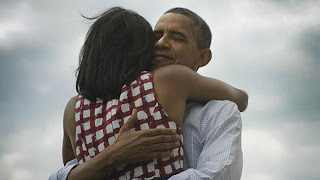


Obama has been instrumental in pushing through defence deals worth $10 billion with India in his first term creating thousands of jobs back home. Many of the defence deals with the US are still in offing.

Prime Minister Manmohan Singh also congratulated Obama – with whom he shares a special equation -for his re-election. “I have no doubt that there is much more we can do together to further strengthen the India-U.S. partnership and thereby advance peace and stability, expand mutual economic opportunities, harness the potential of science and technology, innovation and higher education and empower our people to address global challenges,” Singh said in his congratulatory message. 


Obama has also been pushing for better relations with India as was evident during his four day presidential tour – the longest overseas visit by him as President. Obama, who broke the racial ceiling for being the first Black elected President in the White House, also expressed his solidarity with India in countering terrorism.

As per keen watchers of the defence industry, there will be “renewed thrust” from Obama on signing of more defence deals with India to help the economic crises back home. The total defence trade between the two countries in last 10 years has been $ 10 billion and in 2011 only India has purchased military equipments worth more than $4.5 billion from the US. The big ticket deals signed with the US in the last five years been eight P-8I maritime surveillance and anti-submarine warfare aircraft from Boeing valuing $ 2.1 billion. India is also buying 10 C-17 heavy-lifters from Boeing for $4.1 billion. The six C-130 J special operations aircraft valuing $ 1.2 billion have already arrived in the country and order for six more is in the offing. India is also planning to place an order for M777 ultra light howitzers for $ 700 million to augment its firepower in the mountainous terrain.


The US firms have also emerged as the chosen one for supplying the attack helicopters and the heavy lift helicopters for the Indian Air Force.

In a gesture to reciprocate, the US also eased its US Export Controls and Technology security policies towards India and removed premier Defence Research and Development Organisation and Indian Space Research Organisation (ISRO) from the Commerce Department Entity List.

The US earlier this year unveiled a new military strategy for Asia-Pacific under the leadership of Obama giving a more pivotal role to India to counter the rise of China. The US has been all out trying to woo India by stepping up bilateral defence trade and cooperation. The US also underlined its commitment towards the modernization of the Indian Army.

With the US set to pull out its troops from strife-torn Afghanistan by 2014 end, it has been urging India to play a greater role in stabilizing the country. So far India’s involvement in Afghanistan has been limited to economic and soft skills development. The US is keen on New Delhi’s help in training Afghanistan police and Army.

Saturday, September 29, 2012

US' search for dead soldiers postponed for 2013

The recent ethnic violence in Assam that kept the Indian Government on tenterhooks has also dealt a blow to the US efforts to search for the remains of American soldiers who died in air crashes in North East India during World War-II campaigns.
 First Lieutenant Irwin 
 Search conducted during 2008
After the Indo-US political military dialogue in June this year, the bereaved families of the missing American soldiers were hopeful of giving a closure to the search of their loved ones after six long decades as India positively considered the request of the US government to resume search in the region.

However, to fulfill its motto of “No one left behind”, the US government will have to wait longer as the resumption of search has been postponed till next year.

“Due to the recent escalation of ethnic violence in northeast India, the government of India has officially postponed all JPAC operations in India until spring 2013,” the US’ Defense Prisoner of War/Missing Personnel Office (DPMO) said on its website. The search was suspended in 2009.

Hundreds of soldiers are reported to be missing in the region known as the “hump” – the eastern end of the Himalayas, over which American pilots used to run air supply lines to refurbish its own air force units and the army of Chiang Kai Shek. In US army parlance, it was also called the “China-Burma-India” theatre of operations.

According to Indian official sources, at least 94 soldiers are said to have died in crashed in the region which now lie within Indian Territory.

As per the website of the US military’s Joint POW/MIA Accounting Command (JPAC) more than 400 defence personnel are unaccounted for in this region, though it's not clear in which country the remains will be found. JPAC teams had conducted investigations thrice in India in 2008 and 2009, but the operation had been suspended for more than two years.

The recent postponement has disappointed the families of the missing American soldiers. 57-year-old software programmer Gary Zaetz, who lost his uncle First lieutenant Irwin Zaetz during a crash of B-24 Bomber in Assam, termed it “shocking and discouraging”.

Sunday, September 2, 2012

US defence firms closing down offices in India?

The global economic slowdown and convoluted acquisition processes of Indian Armed Forces has compelled the US defence giants in India to either pack up their offices or cut down manpower drastically.

The six Lockheed Marting C-130Js purchased from the US through FMS route

As procurement programmes of the Indian forces are becoming a game of ‘snake and ladder’ where tender cancellation and retendering has happened quite often, the US firms are relying more on the Foreign Military Sales (FMS) or government-to-government sales route. Facing economic slowdown back home these firms have been advised to pack up from India or at least cut down expenditure. Among the defence giants likely to cut down their staff in the country significantly include Northrop Grumman, Lockheed Martin and Boeing.

“The US aerospace firms were relying heavily on the MMRCA (medium multi-role combat aircraft) deal. But the high sales pitch fell flat as the IAF chose the French fighter jet. Thereafter the deals bagged by the US firms have not been through competitive bidding but through government-to-government sales,” sources in the market said.

The big ticket deals signed with the US through the FMS route have been eight P-8I maritime surveillance and anti-submarine warfare aircraft from Boeing valuing $ 2.1 billion. India is also buying 10 C-17 heavy-lifters from Boeing for $4.1 billion. The six C-130 J special operations aircraft valuing $ 1.2 billion have already arrived in the country and order for six more is in the offing. India is also planning to place an order for M777 ultra light howitzers for $ 700 million to augment its firepower in the mountainous terrain. In total Indo-US defence trade has been worth $ 10 billion and in 2011 only India has purchased military equipments worth more than $ 4.5 billion.

Though no company is openly accepting the cut down, sources confirm that starting with Northrop Grumman they have decided to cut down as fast as possible. Northrop Grumman had opened office in India in 2007. Lockheed Martin and Boeing are also focusing on deals through FMS route.

“In India the competitive tendering is still in formulative stage where the process takes years at length. So the efforts are more. However, we have realized that India will come to the US for weapons and platform it desires and FMS route is giving more dividends and saving time for both sides,” added company sources requesting anonymity.

Boeing's AH-64 Apache helicopter is frontrunner in the 22 attack helicopters tender of the IAF

Cutting down spending on maintaining big offices in India, the US along with many European defence firms have shifted focus to the Middle-East and the South American country. The BAe Systems is also expected to cut down their staff and in six months might go back as there is nothing significant happening for them in India, unless Eurofighter makes a re-entry in the “Mother of all Deals” – $ 20 billion order for 126 fighter jets.

“The Middle-East region is perpetually volatile and there have been sustained demands from these countries. Also South American countries have also shown interest in the US military hardware – making them desired market for us,” added the sources.

Monday, July 23, 2012

US woos India to get larger share in defence market


After its new military strategy for Asia-Pacific was received with apprehensions in India, the US on Monday went all out to woo New Delhi to step up bilateral defence trade and cooperation.

US Deputy Defense Secretary Dr Ashton Carter, who was visiting India as a point person of US Defense Secretary Leon Panetta, underlined the US commitment for Indian military’s modernization and pitched New Delhi to purchase highest quality military equipment from Washington.

“As a country committed to enduring peace and security in the Asia-Pacific region, India deserves the best military equipment available. And we are prepared to help. We want to be India’s highest-quality and most trusted long-term supplier of technology in such fields as maritime domain awareness, counter terrorism and many others,” Carter said at the function of Confederation of Indian Industries (CII).  

Without naming Russia that has been one of the biggest co-developer of India in various military projects, the US also offered to step up military ties between the two countries to cooperation with joint ventures in important projects. “We can conduct research and co-develop technologies together – like batteries and micro UAVs – good initial steps, with much more to come,” said Carter.

In the last ten years, the Indo-US defence trade has been worth $ 10 billion and in 2011 only India has purchased military equipments worth more than $ 4.5 billion. Carter, in fact, added that government to government purchases from the US is in India’s strategic and commercial interests.

Sidestepping the controversial issues of the US continuing aid to Pakistan and it propping India as a counter to China in the region, Carter contended that the US strategy to deploy 60 percent of its military assets in the Asia-Pacific region by 2020 has nothing to do with China’s rise. “Our re-balance is not about China or the United States or India or any other single country or group of countries: It is about a peaceful Asia-Pacific region, where sovereign states can enjoy the benefits of security and continue to prosper,” Carter added.

In a bid to woo Indian defence establishment further, Carter said that the US is addressing India’s concerns on the US Export Controls and Technology security policies. Trying to mollify the Indian defence establishment that alleged that the removal of DRDO and ISRO off the Commerce Department Entity List was merely on papers, Carter said: “We have an export control system to prevent high-end technology from getting to states that should not have it, but our system can be confusing, rigid and controls too many items for the wrong reasons. We know we need to improve it.”

Tuesday, June 5, 2012

Panetta meets PM, US seeks larger role for India in Af-Pak

With Asia-Pacific region gaining top importance in the US strategic matrix, the US Defense Secretary Leon Panetta began his India visit on Tuesday with a meeting with Prime Minister Manmohan Singh and seeking New Delhi to play a greater role in the volatile Af-Pak region.

The gradually ascending assertiveness of China in the South China Sea is also going to be one of the focus areas of Panetta’s maiden visit to India since taking over as the Defense Secretary. Prior to Panetta’s visit the US has announced to base 60 percent of its military assets in the Asia-Pacific region much to the chagrin of China.


The US Defense Secretary, who is on a nine-day tour of Asian countries, landed here around 1.30 pm and headed to meet the Prime Minister at 7 Race Course Road. In the one hour meeting, Panetta is said to have touched on the two issues along with bolstering strategic and defence cooperation among the two countries.
Panetta will be meeting Defence Minister AK Antony, National Security Advisor Shivshankar Menon along with a delegation to discuss various regional and global security issues. India is pivotal to Pentagon's new defence strategy that puts greater focus on the Asia-Pacific. In the strategy document, India was singled out owing to its geo-strategic location that gives it a vantage status both in East and West Asia.

With the US set to pull out its troops from strife-torn Afghanistan by 2014 end, it has been urging India to play a greater role in stabilizing the country. So far India’s involvement in Afghanistan has been limited to economic and soft skills development. The US is keen on New Delhi’s help in training Afghanistan police and Army.

With the Defence Minister Chinese assertiveness will be an important talking point for Panetta. At recently concluded Shangri La Dialogue, Antony termed China’s huge defence spending as “a matter of concern”. For the US, emergence of China as a major regional power has been a matter of “top priority” pegging it with no choice but to cement its strategic ties with India as its relation with Pakistan continues to churn. During Panetta’s visit both the countries will be exchanging their assessment of China’s rise.

Besides this, Panetta is likely to push for discussions on the three basic defence agreements namely—the Logistics Support Agreement (LSA), Communication Interoperability and Security Memorandum of Agreement (CISMOA) and Basic Exchange and Cooperation Agreement for Geo-Spatial Cooperation (BECA) – in limbo for years now. Both the sides have already signed the End User Agreement, under which US may carry out verification of its weapon systems. 

The LSA would require both countries to provide their bases; fuel and other kind of logistics support to each others' fighter jets and naval warships. The agreement has been in limbo for years now. The US has agreements similar to the LSA in place with some 65 countries. With the Indian and US militaries increasing their engagement in war games on land, in the air and at sea, CISMOA has become a necessity to ensure there are no communication glitches.

Defence deals will also be on Panetta’s mind as in the defence trade between India and US is on the rise even as the US companies lost out the multi-billion dollar fighter jet deal. The two countries have signed over defence deals valuing more than $ 8.5 billion in the last 11 years. Deals worth many more billions are in the offing. The major deals include acquiring six more C-130 J Super Hercules aircraft, four more P-8I long range maritime reconnaissance aircraft, Javelin anti-tank guided missiles, Jaguar engine upgrades, M-777 ultra-light howitzers and AH-64D attack helicopters.

Friday, May 11, 2012

Decks cleared for first artillery induction after 26 years

After shadows of scam and bribery allegations stalling the modernization of Indian Army’s artillery for 26 years, decks have been cleared for the procurement of the 146 Ultra Light Howitzers from the US and the deal is likely to be signed next month.
The deal is said to have reached final stage as the Defence Acquisition Committee gave its approval for the purchase. The nod of DAC headed by Defence Minister AK Antony came after a committee headed by the Chief of Defence Research and Development Organisation (DRDO) and Scientific Adviser to the Defence Minister Dr. VK Saraswat submitted a report recommending the change in General Staff Qualitative Requirements (GSQRs) to facilitate the government to government purchase from the US and breaking the Bofors jinx.

The Committee under Saraswat was set up following complaints of the M777 guns not matching the requirements laid down by the force. According to sources, following an examination the Committee has approved the changes in the qualitative requirements and acquisition of the guns to be deployed in the mountainous terrain bordering China.

Sources indicate that the $ 700 million deal is likely to be inked during the visit of the US Defense Secretary Leonne E. Penetta next month. The force is hoping that it will get its first light weight towed gun by the end of this financial year.

India has not bought any artillery guns since the controversial Bofors deal in 1986. The Indian Army is now left with just about half of its 410 guns purchased then, with normal wear and tear and cannibalisation accounting for the remaining howitzers. The controversy that ensued the allegations of kickbacks in the Bofors deal also involved the name of the then prime minister Rajiv Gandhi. The scandal sounded epitaph for all the things related to Bofors, despite the Supreme Court not finding any wrongdoing in the deal.

Since then the repeated attempts to induct the artillery guns have been stalled. In 2005 the South African gun maker Denel was blacklisted following allegations of corruption. The Singapore Kinetics – a contender in the tenders for the artillery guns – met the same fate in 2009. The firm was banned from conducting any defence dealings in India for the next 10 years in 2012.

Monday, April 16, 2012

Amazing pics of Indo-US Malabar exercise


 F-18 Super Hornet prepares to take off from USS Carl Vinson

 INS Kulish guided-missile corvette passing by USS Carl Vinson (Above)
INS Ranvijay guided missile destroyer passing by USS Carl Vinson (Below)

INS Satpura, INS Ranvir and INS Ranvijay participating in the exercise. This is the first wargames for the indigenously-built INS Satpura - the Shivalik class stealth frigate. I happened to attend its commissioning in Mumbai last year. The last in the series INS Shayadari built under Project-17 at Mazagon Dockyard Ltd (MDL) will be commissioned sometime this year.


Nimitz class aircraft carrier USS Carl Vinson leading the Carrier Strike Group 1

(Photos: Courtesy US Navy)

Saturday, April 7, 2012

US warship that gave sea burial to Laden visiting India

Photo Source - US Navy website

USS Carl Vinson – the US aircraft carrier that carried out the sea burial of the most dreaded terrorist in the world Osama Bin Laden – has arrived in India to take part in ten day long wargames with the Indian Navy off the coast of Chennai and then in Bay of Bengal.

About a year back, the dead body of the world’s most wanted terrorist was on the deck of the USS Carl Vinson before it was lowered into the sea – Laden’s final resting place somewhere in the Indian Ocean Region (IOR). Run on nuclear fuel, the 31-year-old Vinson was also deployed around Iran in 1990’s and in the north Arabian Sea to launch first strikes of Operation Enduring Freedom against Afghanistan after 9/11 terror attack.

Floating deck carrier Vinson has led the US 7th Fleet comprising of guided missile cruiser USS Bunkerhill, guided missile destroyer USS Halsey and logistics ships UNNS Bridge. Los Angeles- class submarine USS Louisville and a P3C Orion reconnaissance aircraft to India for the 16th edition of the Malabar exercise that began in 1992.

Based in Japan, the 31-year-old Vinson has been responsible for transporting Laden’s body to his sea burial after he was killed by US Navy’s Seals from his safe house in Abottabad, Pakistan. Presently it has reached off the coast of Chennai on the Western shores with a 6000-strong crew. The ship goes by the nickname the "Gold Eagle" -- so called for the eagle prominently featured in its seal. The eagle, which is meant to be emblematic of the country, carries a banner displaying the Latin phrase, "Vis Per Mare," which means "Strength from the Sea" and is the ship's motto.

Vison’s crew along with those onboard other warships will take part in table-top exercises here for the next four days beginning April 7. Thereafter the 7th Fleet will move to the Bay of Bengal.

In the Bay of Bengal, right under the dragon’s neck, Vinson will undertake naval wargames with the Indian Navys’ flotilla comprising of indigenously built guided missile frigate INS Satpura, guided missile destroyers INS Ranvijay and INS Ranvir, missile corvette INS Kulish and fleet tanker INS Shakti. Maritime patrol aircraft Tu-142M and other rotary wing aircraft of the Indian Navy will also take part in the exercise.

Except for the 2007 edition the exercise has never taken place in the Bay of Bengal. Also the Indian government has been wary of making Malabar a multi-lateral exercise lest it irks China.  India decided to not to expand the Malabar exercise after the neighbor in the east- China strongly objected to the 2007 edition of the Malabar exercise that saw five countries - India, US, Australia, Japan and Singapore exercising in the Bay of Bengal. Beijing has seen the exercise as a grouping of democratic countries in the Asia-Pacific Region to contain the rise of the Dragon.

Sources say that both the forces will simulate in anti-submarine operations, submarine to submarine operations, flying operations and cross deck embarkations. During the exercise, alternating control and command will also take place, under which the Indian fleet commander will take over the command of the US fleet and vice-versa.

Monday, April 2, 2012

US, India retain No. 1 status of exporter, importer


The SIPRI's report for the year 2012 reveals that the US and India have retained their status of the world's largest arms exporter and importer in the year 2011. The arms business in the same period has increased by a whopping 27 percent. You can download the SIPRI factsheet from the link given below

Saturday, March 31, 2012

IAF to get first C-17 heavy lifter by June 2013

The first of the 10 Boeing C-17 Globemaster III heavy lifters will be delivered to the IAF in June 2013. The next nine aircraft will be delivered by 2014.  Boeing is shortly going to start training the IAF pilots to bring the aircraft to India next year. The training is likely to begin in May/June. Initially 10 of IAF pilots will be trained for the aircraft.

On the lines of the C-130Js bought from the Lockheed Martin, Boeing will also be helping the IAF in setting up a swanky airbase and other infrastructure  facilities. The heavy lifters are likely to be based at the Hindon airbase in Ghaziabad.

Timeline of the C-17 project

  • Letter of Agreement signed - June 2011
  • First Flight of the aircraft - Jan 2013
  • Certification - May 2013
  • Delivery date of India's first C-17 - June 2013
  • Next 9 aircraft by 2014

The government-to-government deal to acquire 10 C-17s for $4.1 billion is the largest defence deals between the two countries. The IAF has become the largest customer in the world for the US-built heavy airlifters.


C-17 in reverse gear

The strategic airlifters will be the largest in the transport fleet of the IAF will be replacing its ageing Soviet-era fleet. The aircraft powered by four engines has capability to perform in hot climate and high altitude; and also it can land at short runways. 

 C-17 just after take-off

A tactical and strategic airlifter, the C-17 can land combat-ready troops in remote locations or airdrop them directly where needed. The C-17's ability to back up allows it to operate on narrow taxiways and congested ramps.

With a maximum payload of 75 tonnes, the C-17 can take off and land in merely 3,000 feet runway or less.